
The Ho Chi Minh City Baseline.
A curated synthesis of foundational economic and demographic indicators. Raw data is noise; our analysis transforms these metrics into a structural map for institutional planning and regional expansion in South Vietnam.
Metropolitan area estimate for Q1 2026.
Year-on-year expansion in service and tech sectors.
Nominal increase of 8.2% versus previous fiscal year.
Total registered capital across industrial zones.
Macro-Economic Performance & Output
Ho Chi Minh City remains the economic engine of Vietnam, contributing approximately 22% of the national GDP. Our metrics point to a sector shift: while manufacturing remains a cornerstone, the digital economy and logistics are now the primary drivers of acceleration.
-
Service Sector Dominance
Services now account for 62.1% of the city's total GRDP structure.
-
Industrial Resilience
High-tech manufacturing in District 9 continues to attract global semiconductor interest.
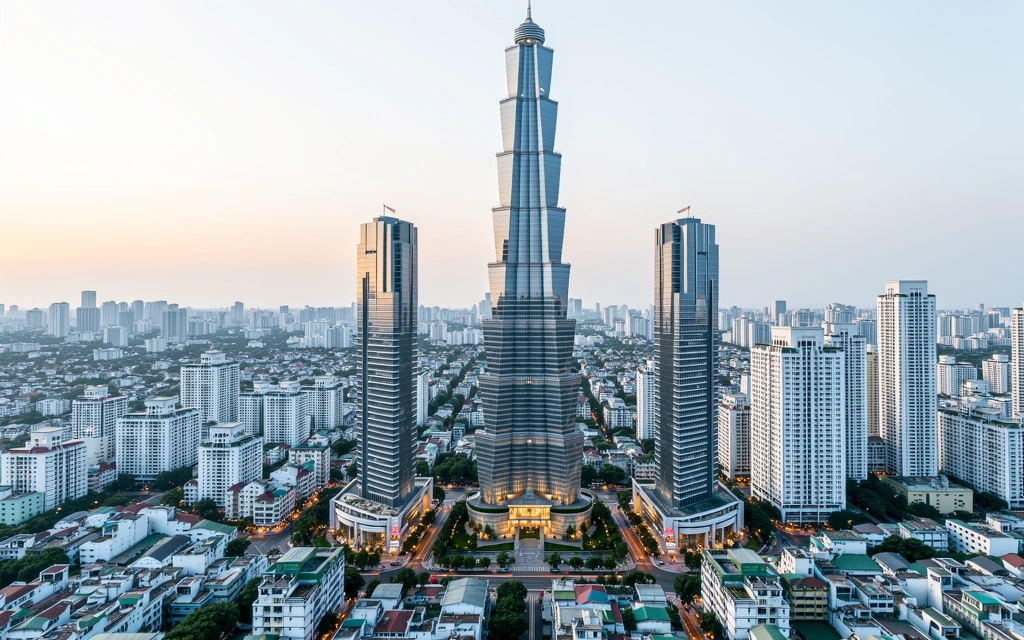
Development Horizon 2026
The current data analysis suggests a 7.2% projected growth rate for the coming 12 months, contingent on the completion of the Metro Line 1 infrastructure and the expansion of the Tan Son Nhat airport terminal.
The Human Capital Infrastructure
Ho Chi Minh City functions as a talent magnet for the Mekong Delta and Central Highlands. The demographic profile is notably young, with 68% of the population within the working-age bracket (15-60). This metrics profile creates a high-velocity consumer market and a robust labor pool for knowledge-based industries.
Individuals with university-level certification or technical vocational training living within the city limits.
One of the youngest urban workforces in Southeast Asia, driving rapid adoption of digital services.


Sector Analysis Matrix
Compare core metrics across the city's three most active commercial pillars. All data reflects the status as of March 2026.
Grade A Office Vacancy
A slight increase due to new completions in Thu Thiem. Rates projected to stabilize by mid-2026.
Avg. Residential Price
Premium segment remains resilient despite credit tightening in the secondary market.
Absorption Rate
Strong performance in the affordable luxury segment within suburban districts.
GMV Growth
Rapid expansion of social commerce and live-stream retail platforms.
Active Online Buyers
72% of the city's total population engaged in monthly digital transactions.
Avg. Ticket Size
Incremental growth driven by home appliances and premium fashion.
Port Throughput
Cat Lai remains the primary gateway for regional maritime trade.
Warehouse Occupancy
High demand for cold storage and modern fulfillment centers near Ring Road 3.
Delivery Speed (Avg)
Hyper-local logistics benchmarks in core urban districts (D1, D3, Binh Thanh).
How We Collect Analysis
Accuracy is the core mandate of Ho Chi Minh Metric. Our market metrics are derived from a multi-layered verification process that ensures institutional-grade reliability.
Full Methodology DocumentGovernment Aggregation
We synchronize daily with official indices from the General Statistics Office (GSO) and the Department of Planning and Investment.
Proprietary Field Surveys
Active quarterly footfall and pricing surveys across 450+ key commercial touchpoints in the metropolitan area.
Cross-Reference Logic
Data points are verified against third-party banking records and utility consumption patterns to filter outliers.
Inflation Adjustment
All financial metrics are presented in both nominal and real terms to account for regional CPI fluctuations.

Need a Decisive View of the Market?
While the metrics on this page provide an essential overview, your specific investment or operational strategy requires granular analysis tailored to your sector. Connect with our senior consultants for a deep-dive session.
Ho Chi Minh Metric (HoChiMinhMetric.digital) provides this data for informational purposes only. While we apply rigorous analysis to all metrics, past performance is not a guarantee of future economic results. Standard reporting window: Q1 2026.